Showing posts with label Bones and joints. Show all posts

Sunday, December 01, 2019

We all have hourglass figures;   
Your sand just settles in different places.   

 Octavia Spencer      
 Silicon (Si) is the eighth most common element in the world, and the second most common element in soil (oxygen is first).  The majority of naturally occurring Si is present in highly stable minerals as silica and silicates--think sand. These minerals are highly stable, resistant to dissolving into chemical forms that could be absorbed by the gastrointestinal tract, in other words, not bio-available.  Si is beneficial in many ways to the life cycle of plants and is an essential component in their cell walls supporting structural integrity of plant growth.  Turns out it’s an important component in our skeleton and connective tissue as well.   There’s no official recommended daily allowance for silicon, but the figure 25 mg/day has been thrown out recently as a good guess.  Here are suggestions to reach that goal. 

 Si food content is highest in whole grains, vegetables, and....beer.  So what’s good for breakfast?  A standard serving of oatmeal is ½ cup of oats with a silica content of 10 mg.  For lunch?  Nothing more satisfying, or perhaps disappointing, than sitting down to a cup’s worth of steamed green beans, another 10 mg.  If you’re a fan of India Pale Ale, rejoice at happy hour because a can of IPA delivers 18 mg.  These suggestions are based on information from various web-sites found when searching for “foods high in sililca.”  As noted above, however, that which resides in plants and beer (which is made from plants) is not necessarily bio-available.   

 Researchers in the UK, well-apprised of the Si content of various substances, set out to examine just how much is really absorbed through the GI tract in fasting, healthy test subjects.  A number of high Si-containing substances were tested, including 1) OSA or ortho-silicic acid found in small amounts in soil and naturally in water , 2) monomethyl silanetriol or MMST available as a supplement called LivingSilica, 3) bananas, 4) green beans, 5) choline stabilized OSA (CH-OSA) which also comes as a supplement called Biosil,  and 6) alcohol-free beer.  Absorption, based on testing urinary excretion of Si post-ingestion, was highest for MMST and alcohol free beer (64%) followed by green beans (44 %), OSA (43 %), ChOSA (17 %), and bananas (4%).    

 Si not only is incorporated into bone matrix but also contributes to collagen formation which promotes teeth, strong nails, thick hair, and skin that does not so easily give way to gravity as the years go by.  Brittle fingernails and receding gums are two clues to bone loss.  Aging is a risk factor for decreasing bone density as is a personal history of fracture, a history of osteoporosis or fractures in one’s mother, smoking, and low body weight.  Besides eating vegetables, grains, and maybe drinking beer--but not too much please--if you have signs or test results indicating a loss of bone, you might consider taking a Si supplement.  I personally take MMST, available via Amazon, and I splurge on a third of can of IPA at night.  


Monday, September 16, 2013

Blood Vessel Calcification (or Part III of Should I take calcium?)

Here's the heart of the calcium supplement debate. Does taking extra calcium for prevention and treatment of bone loss associated with aging hasten the calcification of blood vessels, a process which is also associated with aging. That which is normal and healthy for your skeleton, namely the incorporation of calcium crystals into its structure, is neither normal nor healthy within your arteries.  Studies of aging humans and their whole body CT scans suggest that virtually all men and women have some demonstrable vascular calcium by age 70.(1)  Furthermore, the calcification was widespread in 80% of men and 60% of women by that age, and extensive calcification is known to correlate with a high degree of atherosclerosis more commonly known as 'hardening of the arteries'.(2)

This sort of dilemma--a basically good physiological process gone rogue--takes us into a lot of science on calcium, injury, hormones, aging, and inflammation.  The CT scanning study cited above not only confirmed that calcification, and therefore atherosclerosis, is definitely correlated with aging and increases as the years progress, it also, once again, found that menopause with its attendant loss of estrogen is also a time of accelerated progression of vascular disease.  Women under 50 years of age were much less likely than men to have calcium, but the prevalence of calcified vessels greatly increased between 50 and 60, and the gals were as likely as the guys to have calcifications by age 70 (just not as extensive).  Whether or not hormone therapy can slow down this vascular deterioration is another complicated story for another post.

Of note in this discussion, however, is the immune system's response to the presence of calcium crystals in developing atherosclerotic lesions in arteries.  Cells called macrophages which are first responders to bodily harm show up early in the course of blood vessel injury and set immediately to work eating foreign invaders Pac-Man style.  As they gobble up various harmful substances such as oxidized LDL cholesterol or basic calcium phosphate (BCP) crystals, they send out proinflammatory cytokines which are chemical messenger molecules that further activate an immune response.  This is a good thing with regards to incoming foreign bodies such as bacteria or dirt from the sidewalk when you've fallen and scraped your knee, but not so good when it's an ongoing assault from various environmental insults such as LDL-cholesterol, trans-fats, cigarette smoke, or...too much calcium (more on this later).  The inflammation from BCP crystals in activated macrophages "may lead to a positive feed-back loop of calcification and inflammation driving disease progression."(3)  In other words, once blood vessels are disturbed by calcification, the immune response invites the deposition of more calcium.

Here's one more puzzle to set your head reeling (mine is already so why not join me?).  There is a known clinical association between vascular calcification and osteoporosis.  In other words, those of us dealing with loss of bone mineral density are the very people that need to worry most about gaining unwanted vascular mineralization in the form of calcium in our arterial walls.  This suggests a link between bone and vascular metabolism.  Either vascular calcification promotes bone mineral loss, bone loss hastens vascular calcification, or there's a common underlying pathology to both processes.  The latter seems the most likely scenario, and the underlying normal and abnormal physiology of calcification in the body finally leads to some answers about whether or not calcium supplements are a good idea.

More on that in the next post.


____________
1) Matthew A, et al. Patterns and Risk Factors for Systemic Calcified Atherosclerosis. Arteriosclerosis, Thrombosis, and Vascular Biology.                                   
2) Solberg LA, Eggen DA.  Localization and sequence of development of atherosclerotic lesions in the carotid and vertebral arteries. arteries. Circulation; 1971.
3) Nadra, I, et al. Proinflammatory Activation of Macrophages by Basic Calcium Phosphate Crystals via Protein Kinase C and MAP Kinase Pathways. Circulation Research. 96: 1248-1256.

Friday, August 30, 2013

Should I take calcium? Part II

In Part I of this series of posts, I discussed the science behind calcium intake.  In short, what goes out via intestinal loss (at least 150 mg/day or more) and kidney excretion (at least 100 mg/day or more)(1) must be replaced in order to maintain a steady level of calcium in the extracellular fluid (ECF) including blood.  If calcium out is greater than calcium in, the parathyroid glands release a hormone which facilitates breakdown of bone mineral matrix freeing calcium to enter the ECF. Thus, bone-based calcium is not only an integral part of your skeletal strength but also a readily available calcium reserve in case you're running short.

Clinical research scientists who regularly conduct studies on every sort of medical dilemma have compiled an enormous amount of data on the benefits of calcium intake. Starting from an evolutionary perspective--my personal favorite--let's first consider our ancestors from 10,000 years ago when life was quite different but the human genome was not. 

Radiologists and anthropologists from Emory University have determined that our ancestors--both human and primate--ate a lot of high-calcium insects and high-calcium plant food.(2)  These experts estimate that our Stone-Age predecessors took in at least twice as much calcium, mostly from plant based sources, along with more fiber, micronutrients, and protein than we consume with our modern diet. They ate virtually no grains which are not only a poor source of calcium but certain varieties including wheat contain phytates, a compound which binds minerals and decreases their absorption. X-rays of our foreparents' fossilized skeletons confirm that the outer layers of their bones were nearly 20% thicker than ours.  Strong Cro-Magnon structure was the result of a whole lot of outdoor hunting and gathering plus lots of calcium.  The authors of this review conclude that the best-for-modern-bone plan would include a return to the "nutritional pattern for which we have been genetically programmed by evolution."

There is an enormous amount written about the effects of calcium supplementation, with or without vitamin D, in a modern population that avoids the sun and doesn't snack on praying mantises.  The evidence is clear that calcium intake can promote a positive calcium balance--more in than out--which in turn reduces the rate of bone loss and may result in an increase in bone density.  What is not clear is whether or not this has a positive effect on fracture risk. Some experts point out that many of these studies were too short in duration to fully evaluate the long-term benefits of better bone. One study out of France(3) featuring 3,000+ old ladies with added calcium, however, demonstrated decreased fracture risk in just 18 months of follow-up! Half the subjects in this investigation received 1200 mg of calcium plus 800 units of D each day and ended up 43% less likely to have broken their hips by study's end compared with their colleagues who took look-alike placebos.

The US Preventive Services Task Force spent a lot of time reviewing this mountain of medical evidence.  They considered "meta-analyses" that pooled data from multiple studies and concluded that there was not enough evidence to support a recommendation for the use of supplements, and declared that smaller doses (less than 1,000 mg/day calcium and 400 units D) made no dent in fracture risk at all.  Because extra calcium intake can increase the incidence of kidney stones in susceptible persons, the USPSTF graded such dosing as Grade D, i.e. don't do it!

Uptodate.com, a 'living' on-line textbook for doctors, also considered the data, last updating the section on calcium supplements on August 28, 2013.  The reviewers agreed that the fracture data was variable, but were particularly impressed with the data from the Women's Health Initiative, the same trial that created headline news about negative health outcomes from the long-term use of HRT.  Over 36,000 women were assigned to take 1,000 mg/day of calcium citrate with 400 units of vitamin D or placebo pills.  Those who were most compliant with the regimen, taking at least 80% of the supplements over 7 years of follow-up, had a nearly 30% decreased risk of hip fracture.  Overall, compliant or not, the calcium/D group had a 12% decrease in fractures.

Uptodate's wrapped up their discussion after considering the latest data as of just two days ago by stating "Based upon the meta-analyses discussed above, we recommend 1200 mg of calcium (total of diet and supplement) and 800 int. units of vitamin D daily for most postmenopausal women with osteoporosis."  And, spoiler alert, they took into account the effect of supplemental calcium on the risk of cardiovascular disease.

More on that in Part III.
_____________
1) Houillier, P et al.  "What serum calcium can tell us and what it can't".  Nephrol. Dial. Transplant. 21 (1): 29-32.
(2)Eaton, SB and Nelson, DA.  "Calcium in Evolutionary Perspective." Check it out for the calcium content of grasshoppers and moths!
(3)Chapuy, MC et al.  Vitamin D3 and calcium to prevent hip fractures in the elderly women.  N Engl J Med 1992 Dec 3;327(23):1637-42.

Wednesday, August 28, 2013

Should I take calcium? Part I


I have been reading up on that which is good for blood vessels versus that which hastens their demise.  In particular, owning a set of bones increasingly fragile with age, I was curious about the effects of calcium supplementation on vascular health.  Recent headline news from the latest medical research suggests that excess intake of calcium tablets results in deposition of calcium in the walls of arteries--not something you'd wish on your hardworking vessels. I used to recommend adequate calcium intake as  an integral part of the prevention and treatment of age-related bone loss-- 1,000 mg/day total (diet plus  supplements) if on hormone replacement and 1,500 mg/day if not. Now the US Preventive Services Task Force says no. In fact they give a calcium plus D supplementation strategy a "D" grade (which is very strong language for the USPSTF) based on the increased risk of kidney stones but mentioning not at all this vascular business.  Uptodate.com--a widely used on-line resource for physicians says yes.
What's an old lady to decide?  Do I recommend extra calcium for myself and for others? 
After two hours of reading, I realized this was a decision so complex that it could not be answered in a single day nor a single post.  I decided to approach the problem according to the 8 components that I believe are the basis for making medical decisions.  In brief,  I think physicians bring three areas of expertise to the process--the science, the evidence from a constantly changing body of medical literature, and their personal practice experience.  Patients (and in this case I'm filling both roles) bring their current situation, their personal medical history, their family history, and their beliefs to the table.  Finally, and unfortunately, the insurance company brings its willingness to pay into the picture.  This is  not important here as calcium and D supplements are not an insurance-covered benefit.

A steady level of circulating calcium in the fluids and blood surrounding our cells is essential to the proper function of multiple organ systems, especially normal nerve conduction.  Too little can cause spasms, seizures, and abnormal heart rhythm; too much leads to confusion, coma, and abnormal heart rhythm.  As a result, a wonderfully orchestrated system controls serum calcium by balancing incoming sources from both intestinal absorption and internal release from bones with outgoing losses through the colon and the kidneys.  If your serum calcium level is normal on your lab panel, you can thank your intestines, kidneys, bones, and parathyroid glands, but you cannot assume that your calcium intake is adequate nor that your bones are holding up okay. 
In order to maintain that crucial balance, calcium in to the extracellular fluid (ECF) must equal calcium out.  Your parathyroid hormone levels rise in response to decreased ECF calcium which quickly leads to release of bone calcium.  In the short term, only superficial bone layers are involved in the release of mineralized calcium from the bone structure, and this loss is easily replenished.  On the other hand, a negative calcium balance over time, amplified perhaps by vitamin D deficiency or an age-related drop in estrogen and testosterone, can lead to a loss of bone density progressing to osteopenia and osteoporosis.  
So calcium balance is critical to bone density along with many other functions.  There are many conditions which can cause abnormal calcium levels, but what we are considering here is the situation of an otherwise healthy aging person trying to maintain bone health through calcium intake without increased risk to the cardiovascular system.  The next post will cover the evidence with regards to calcium intake and bone health.
____________
 

Tuesday, November 09, 2010

Sarcopenia or why we install railings by toilets


I attended a funeral last Friday. There was a fair amount of rising and falling to feet and to seats what with religious moments and a standing, whooping, foot-stomping ovation to Megan and her life well-lived. I've written before about funerals, and how I love a good one, but that is not the subject of this post.

My pew-mate was an older woman who carried more than a little extra weight and who struggled mightily to stand each time we were called upon to do so. In front of me sat a skinny woman, still older yet, who did not even attempt to get upright until it was time to leave the chapel. Two elderly friends of Megan, each losing physical ground in her own way, one to excess adiposity and osteoarthritis of knees and hips perhaps, the other to fraility and sarcopenia. The inability to rise from a seated position, however, be it in a kitchen chair, a living room recliner, or a toilet seat, is a big step on the road to dependence and demise.

Aging is filled with -penias as in osteopenia (loss of bone mass short of osteoporosis) and sarcopenia or loss of muscle mass. There are many factors that contribute to this age-related wasting away of muscles some of which not yet elucidated but not the least of which is inactivity brought on by injury, arthritis, and illness which in turn leads to weakness and fatigue which in turn fosters more inactivity.

In order to repair, regenerate, and develop muscles to propel ourselves up out of a chairs and off to the 'frig (or the gym!!), we depend on 'satellite' stem cells that reside on the surface of our muscle fibers. Reduced numbers of such cells coupled with their decreasing ability to do their job is the biological basis of sarcopenia. I've had patients seek out human growth hormone and human chorionic gonadotropin in order to boost muscle mass and reverse aging, but rats and researchers in Washington state and Israel have recently published findings that suggest a simpler, less expensive, more accessible way to get myogenic satellite cells. One word: Exercise!

Rodent models suggest nothing but bad news from aging satellite cells. Satellite cells are usually in a resting state in older animals but can be activated to repair and renew muscles after injury and illness. But satellite cells are more likely to generate fat (the lady next to me!) or fibrous connective tissue (the stringy, skinny lady in front of me!) than muscle fibers as they grow old. So what happens if rats work out instead of veg in front of the TV set?

The researchers confirmed that the older the rat, the fewer the satellite cells on their calf muscles. However, when the four-legged geezers were persuaded to hit the exercise wheel, this aging effect was corrected, and both males and females greatly increased the number of myogenic--muscle producing--cells. Better yet, this cellular change had a visible effect on the old coots with a favorable shift in their lean-to-fat content and on their level of "spontaneous locomotion." Svelte, toned, AND disinclined to sleep the day away in the wood shavings!

One of the ways I assess how my patients are faring is to greet them first in the waiting room. First of all, it's a good way to start the visit, but, in addition, I can watch them rise from their chairs and walk across the room and up two stairs to the hall. I am daily appalled by the way some of my long-time patients increasingly struggle with the task, even moreso by their seeming indifference or inattention to their inability to move with ease. Check out the way you spring from your pew, your toilet, your desk chair. Don't take "can't do it easily" for an answer.
_____
1) Shefer, G et al. Reduced Satellite Cell Numbers and Myogenic Capacity in Aging Can Be Alleviated by Endurance Exercise. www.plosone.org.

Wednesday, September 29, 2010

Best personal trainer deal in Denver

Please note the corrected dates for this program

I have struggled mightily with back pain from scoliosis and degenerative arthritis. Thanks to a program of core strengthening courtesy of two knowledgeable young women--one a Pilates instructor with a strong background in physical therapy and yoga, the other an athletic trainer with a gift for modifying her workouts for older, less flexible non-athletes--my spasms and debility are yesterday's news.

I've put a lot of time and money into this program figuring properly that any bottom line beats crippling pain and decreased mobility. I am pleased to announce now that my trainer Tanya Martelli (Dr. Sykes goes to her too!) has assembled a low cost solution for those of you displeased with your aging spines.

She will be conducting a three class workshop for five participants Oct. 8, 15, and 22 at our office from 4-5 p.m. The focus will be on posture and core power, and at the end of the sessions, each person will have a home program to continue progress made during the class. The cost is $45. If these times do not work for you, Tanya plans another three week session mid-day Tuesdays at the end of this series.

You do not need to be our patient to attend these classes. Interested? Contact Tanya at tlyaskoff@mac.com to sign-up or inquire about future classes. She just designed a home program for me that I took on a recent road trip to California--worked just perfectly to keep me upright and buff while away from home. She could do that for you too!

Friday, April 23, 2010

Fractures and Fosamax

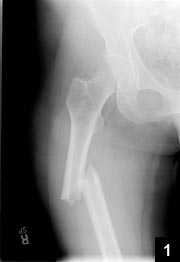
Dang, what was this 60-something year old lady(1) doing that resulted in her femur breaking like a branch across a gardener's knee? The unsettling answer? Nothing. She just felt a "giving away" sensation in her leg and then she gave way and went to ground. Of note, however, she had been taking medications for 17 years to prevent osteoporosis: first Fosamax and then Boniva.

Our bones are in a state of constant turnover. Breakdown of bone matrix by cells called osteoclasts is balanced by a corresponding build-up of bone mass undertaken by osteoblasts--a process that continually replaces old bone with new. In adults, bone formed equals bone broken down as osteoblasts fill areas along the bone surface previously resorbed by osteoclasts. Such dynamic restructuring in response to the forces of gravity and activity is essential to bone strength. In addition, this active bone metabolism repairs micro-traumas caused by everyday wear and tear as well as macro-traumas such as fractures.

As we grow older, we tend to breakdown faster than we build-up (well duh!). Ongoing osteoclastic activity is no longer countered in kind by reciprocal action from aging osteoblasts especially in women who are estrogen-deficient, inactive, on steroids, or deficient in calcium and vitamin D. Now bone resorbed by osteoclasts exceeds bone built by osteoblasts resulting in bones that are not only thinner but also architecturally unsound. As a result, vulnerable areas such as the hip, the vertebrae, and the bones of the forearms lose strength and fracture easily.

One strategy developed to combat this scenario is a class of drugs called bisphosphonates (Fosamax, Actonel, Boniva, Reclast, and others) which inhibit normal bone-remodeling through inhibition of osteoclasts. Since bone resorption triggers bone formation, these drugs are better suited to slowing loss rather than gaining mass. While population studies show decreased risk of fractures in persons using bisphosphonates, disturbing patient histories, such as that from the unfortunate lady pictured above, suggest that extended use of Fosamax and friends may result in bone fragility through the accumulation of microdamage in bones weakened by a loss of the normal reparative functions.

Texas researchers had a look at bone chips from persons who had spontaneous--i.e. no antecedent trauma--fractures while on Fosamax(2) most of whom had delayed or absent healing at the site of the break. Scary stuff on microscopic exam--many of the patients showed "markedly suppressed bone formation" with little or no osteoblastic activity and diminished mineralized bone. Even those patients on concurrent estrogen therapy demonstrated decreased bone formation. While Fosamax was the first bisphosphonate 'out of the gate' and thus most likely to be associated with fractures related to long-term use, scientists believe that this brittle bone thing may well be found with ongoing use of the other agents in this class.

Well yikes, is it time to boycott Boniva? Act not on Actonel? Consider first, this meta-analysis of several bisphosphonate trials.(3) These scientists from four different countries supported by Merck (Fosamax) and Novartis (Aredia, Zolmeta) analyzed data from three large studies looking for risk of fractures of the femoral shaft (considered atypical when compared with the more common fractures of the femoral head) as they were associated with use of bisphosphonates. Most reassuringly, they found such drug-related breaks to be rare, occurring at a combined rate of 2.3 per 10,000 patient-years. In other words, of 1,000 women using a bisphosphonate for 10 years, 2.3 would have an unexpected fracture of their thigh bone. There was no elevated risk of this type of fracture between those on Actonel and those on placebo, and a relative risk of 1.5 for women on Zolmeta (an IV bisphosponate most often used in serious situations such as in women with metastatic cancer where the drug slows down the spread of the tumor through the bones).

In an editorial that accompanies this study(4), Dr. Elizabeth Shane of Columbia University emphasizes that such atypical fractures are extremely rare, and particularly unlikely in persons on bisphosphanates. In fact, she cites studies that show, on average, that these femoral shaft fractures are more commonly caused by osteoporosis than the medications that treat the condition, and high adherence to this drug regimen more often decreases the risk of this type of bone breakage. She concludes: "many more common and equally devastating hip fractures are prevented by bisphosphonates than are potentially caused by the drugs."

Several authors have suggested that women on bisphosphonates be given a drug holiday in order to allow for a time of normal bone remodeling. Bisphosphonates bind to bone and are slowly released by osteoclastic activity. Fosamax is present in the body long after its use is discontinued--one study found bone turnover suppressed for three years after five years of regular Fosamax use. There are no official guidelines to follow with respect to intermittent bisphosphonate use, but one year off does not seem to diminish the positive effects on fracture risk.

What should you do? Talk with your doctor about taking a drug holiday (no, not THAT kind of drug holiday) if you've been on bisphosphonates for more than five years.
_____
(1) X-ray and case history from:
Goddard MS, et al. Atraumatic Bilateral Femur Fracture in Long-Term Bisphosphonate Use. Orthopedics. 2009 Aug;32(8). pii: orthosupersite.com/view.asp?rID=41933. doi: 10.3928/01477447-20090624-27.
(2) Odvina, CV, et al. Severely suppressed bone turnover: a potential complication of alendronate therapy. J Clin Endocrinol Metab. 2005 Mar;90(3):1294-301. Epub 2004 Dec 14.
(3) Black, DM, et al. Bisphosphonates and Fractures of the Subtrochanteric or Diaphyseal Femur. Published Online March 24, 2010 (DOI: 10.1056/NEJMe1003064).
(4) Shane, E. Evolving Data about Subtrochanteric Fractures and Bisphosphonates. Published at www.nejm.org March 24, 2010 (10.1056/NEJMe1003064)

Friday, March 19, 2010

Morton's Foot

Dr. Dudley Morton practiced in the 1930's, first describing a number of foot ailments including Morton's foot (aka Morton's toe), and Morton's neuroma. Morton's foot is a common but dysfunctional variant of foot structure occurring in more than 25% of the population. By the time one hits middle-age, however, the instability caused by this condition can lead to pain and an inability to walk pain-free into the golden years.

Check out the sketch below from The Trigger Point Therapy Workbook for a look at Morton's Foot which is also known as short first metatarsal syndrome. The metatarsals are the longish bones beneath each toe, and the first metatarsal meets up with the big toe at a most critical juncture known as the 1st MTP (metatarsal phalangeal) joint which should be one of the primary weight-bearing areas of your foot.

If you've been issued a stumpy first metatarsal (arrow B), your weight is transferred to the 2nd MTP joint (arrow A) beneath your 2nd toe (arrow C). As a result, your weight can wobble inward towards the arch or outwards towards the little toe which has been likened to 'walking on ice skates'. The 2nd toe may extend beyond the big toe in persons with this Morton's business; while some call this long 2nd toe a sign of nobility. In my experience, it's a sign that you may give up walking for exercise.

Then look out, it's like a veritable aging house of cards cascading down your midline. The arches fall, a bunion may pop out, the ankles hyperpronate (see below), your calf muscles start working overtime to hold up your body,your knees knock together in the midline causing arthritis and collapse of your lateral knee joint,


you start to hate walking, gain weight, and plummet into old age way before your time.

So if that info knocked your socks off, check yourself for Morton's foot thusly:By pulling your toes downwards, you'll be able to see the locations where the metatarsals end and Morton's mayhem begins.

Got Morton's? I do. Custom-made orthotics and Pilates have changed my life. If you've been short-changed on your first metatarsal and are starting to hobble with pain, a trip to the podiatrist is definitely worthwhile. For more information, check out Mortonsfoot.com.

Tuesday, March 02, 2010

Rheumatoid arthritis, disability, and dismay

One of my favorite patients struggles mightily with the pain and disability of rheumatoid arthritis. Unfortunately, she got hooked on Oxycontin that she started taking for the pain of infected foot ulcers brought on by the immune-suppressive drugs she takes to control her disease.

Each time I see her, I'm dismayed with 1) how quickly life can unravel due to disease and disability, and 2) how difficult it is to be taken seriously when you take too many pain meds no matter how legitimate your need for same. I spent over an hour on the phone today with the patient and a pain specialist she consulted last month. The latter never even examined her when she came to his office seeking help with pain control and narcotics withdrawal. "I could have you committed," he told her, "for your illegal use of drugs. What on earth did he think he'd accomplish with nonsense like that except to drive her to tears (which he did).

So now she's fallen and sustained four compression fractures of vertebrae made thin from steroid use. The orthopedist she sees for degenerative disk disease never mentioned to her that her new, dreadful pain was due to fractures. I have no idea what my colleagues think they're doing here. But I do know if you're malnourished, angry, and you look older than you are due to the ravages of pain and illness, it's extraordinarily hard to be taken seriously.

Saturday, September 26, 2009

Big-time kyphosis


When some of my older female patients lie back on the exam table, their heads drop backward, necks extended, due to a forward curve in their thoracic spine between the shoulder blades. This hunchback thing is an exaggeration of the kyphosis or the gentle curve normally present in this area. It can result from weakness of the upper back muscles aggravated by poor posture but it becomes particularly prominent in women suffering from osteoporosis.

The lady in the above x-ray* has a helluva kyphosis based on osteoporosis. Her T score which compares her bone density to the ideally mineralized skeleton is -4.2 (normal range is greater than -1). This means that she has lost 42% of her bone mineral density and is severely osteoporotic. As a result, her normally block-shaped vertebral bones have collapsed anteriorly and become wedge-shaped due to compression fractures. She has lost height; her head and upper body have permanently sunk forward as her spine curled.

She no longer has room for her abdominal organs which have pooched out as her ribs sank into her pelvic bones (yes, that's bowel gas just below her chin--she is permanently gazing at her navel!). Worse yet, her thorax is severely shrunken, and her lungs can no longer fully inflate. She presented to the ER in respiratory failure as she could no longer exchange high CO2 exhaled air for high O2 inhaled air. She died during this hospital admission.

You do NOT want this collapsing spinal column thing. Lie on the floor--does your head flop backwards due to the forward curve of your upper spine? Are you uncomfortable without a pillow when lying flat on your back? Get your bone density checked. Find a physical trainer to nag you about your posture and work on your upper back strength. Take extra D and calcium!
_____
*Blechacz, B. Images in Clinical Medicine. NEJM 6/12/08.

Monday, June 08, 2009

Limbrel--new option for osteoarthritis


I wrote some time ago about licofelone, a new analgesic for osteoarthritis (OA) that was then in Phase III clinical trials. Not only does this new agent decrease pain and inflammation from OA without stomach irritation (a la ibuprofen, naproxen, etc.) or cardiovascular complications (a la Vioxx and Bextra), it also demonstrates potential in actually slowing down joint destruction. Alas, while new reports on its dual action efficacy--analgesia AND disease modification--continue to appear, I can find no information on a release date.

I was pleased, therefore, to learn today about a new drug for osteoarthritis--a medical food actually--from a patient. Limbrel is all phytochemicals which should delight the aging hippies in all of us that search for the natural in the drugs we take to keep old body hooked to mellowing soul. It's made from those two lovely plants pictured above: Scutellaria baicalensis and Acacia catechu.

So here's the scoop. Arachidonic acid(AA) is a polyunsaturated fat that's necessary to body functions when it is appropriately converted to chemicals that protect your stomach lining, dilate blood vessels, promote proper blood clotting, and repair tissues. Too much AA in the wrong place at the wrong time is a bad thing whether it's derived from cellular injury or diet (think twisting your ankle as you eat a Big Mac for a double load of AA). Per Dr. Barry Sears: "...if you inject arachidonic acid into... rabbits they are dead within three minutes. "

As you get older, injured, have an inherited predisposition to arthritis, and eat too much fatty red meat or egg yolks, all that piled up AA gets churned along by the COX-1, COX-2, and 5-LOX enzyme systems into a world of inflammatory molecules and reactive oxygen species which set off a process by which your cartilage is destroyed and your bone overgrows into treacherous spurs.

You can inhibit COX-1 by aspirin or NSAIDs or inhibit COX-2 by Celebrex, but unless you turn down your 5-LOX as well, the resultant imbalance creates other problems. Scientists have sorted through more than a thousand plant-derived molecules looking for flavonoids with favorable suppressive action on these inflammatory pathways. Apparently those pretty posies posing above won the competition, proving both safe and efficacious in decreasing the pain of osteoarthritis.

While licofelone has been shown to slow down the cartilage destruction that leads to permanent joint deformities in osteoarthritis, Limbrel makes no such claims. Whether this is due to a lack of research supporting this function, or simply that it doesn't work in that way is not clear. Limbrel, however, is available here and now whereas licofelone is still churning along on the slow train to FDA approval. I've requested samples from the company, and look forward to working with those of you with the gnarly hands and aching knees of osteoarthritis to see what we think about this one.

Saturday, May 30, 2009

Patellofemoral pain, arthritis, and exercise


First off, an explanation. What's Martha Raye with her toothsome bedentured smile doing in a post on aging knees? If you have patellofemoral arthritis, I think you can relate.

The patella (kneecap) sits in front of the lowest part of the femur (thighbone) at the knee joint. Patella slides over femur as we bend at the knee, and when all is young and working correctly, the cartilage-covered surface of one slides over the cartilage-covered surface of the other.

So with age, cartilage breakdown, misalignment, and saggy old quadriceps (large muscle on the front of the thigh in charge of getting us off chairs and toilets), the patella starts slamming into the front of the femur, and the cartilage frays, tears, and wears away down to bone. So as we squat, plie, rise up, and sit down, one bone grates on the other bone, and...just like Martha Raye fielding a seed between denture and gum...we wince with pain.

Well, that's me. Deep knee bends are yesterday's move, squats out of the question, and I channel Martha Raye during lunges. The first thing I told a personal trainer during a trial session is "I don't do lunges. Period." But she is not taking no lunges for an answer, noting as I have that flexing the weight-loaded knee to heave the rest of me up and down (assuming I'm not in a wheelchair) is what I must do for the rest of my life if I care to remain independent. Is this all about being under 30 and not appreciating how it feels to work-out on aging knees, or is she on to something?

She will feel smugly vindicated when I show her a Dutch study(1) that indicates exercise beats other strategies for relieving patellofemoral pain. The sports medicine practitioners at Erasmus University Medical Center in Rotterdam signed up 131 patients with up to twice that number of painful knees to undergo a 12 week supervised exercise program directed at quadriceps strengthening, flexibility, balance, and coordination or an equal number of weeks under 'usual care' from their physicians. The latter, I'm guessing, means this control group was told "You should do leg lifts and take Advil (or whatever the Dutch equivalent is) and get over it. Next."

On comparing the exercised group with those who motored on without supervision, the researchers found significant improvement in pain and function scores in the former not only at the end of 12 weeks but also on follow-up 12 months later. One can assume that diminished pain means improved alignment and quadriceps strength have improved the tendency of bone to grate on bone and, as a result of this supervised exercise program, wear-and-tear degeneration has been halted.

My trainer has cleverly disguised lunges as other exercises where I hop from bent leg to bent leg as she throws things at me (well, a ball actually), or stand on one bent leg while I do distracting maneuvers with weights in hand, and, well, I hate to admit it but my knees feel better.

So I guess I'll channel Erma Bombeck instead and let Martha Raye rest in peace.
_____
1. American College of Sports Medicine (ACSM) 56th Annual Meeting: Abstract 570. Presented May 27, 2009

Saturday, March 21, 2009

Flector patch--the first NSAID patch for pain


So what does a NSAID patch have to do with this piece of exercise equipment? Let me explain.

It's called a Trikke (as in trike for grown-ups). You use all your balance and leg strength to power this in a skating sort of fashion. Is this the appropriate gizmo for a middle-aged female? No, no, not me, I wouldn't be caught dead on this thing--probably would be dead if I tried. My intrepid medical partner Adele, however, has been seen 'skating' on a Trikke down Montview Blvd. here in Denver, and one day she met the pavement beside her trike, her hamstring muscle ripped from its pelvic attachment.* She healed to skate (and ride, and do Pilates, and lift weights again), but the scarred muscle is not as flexible as it used to be which in turn puts stress on her pyriformis muscle.

So last week she was running from exam room to exam room working her healing magic while occasionally clutching her piriformis muscle which was in spasm whilst whining softly with pain (check out where the pyriformis muscle is and you'll know what she was grabbing). The King Pharmaceuticals rep coincidentally showed up with info and samples of the Flector patch.

A word or two about diclofenac, the active ingredient in this medicated patch indicated for topical use for pain control of acute injuries such as strains, sprains, and contusions. Diclofenac, formerly known as Voltaren, is a dandy non-steroidal anti-inflammatory (NSAID) which reaches high concentrations in joint spaces. It's generic, cheap, works well, AND causes stomach inflammation with bleeding, possible liver toxicity, and can reduce blood flow to kidneys, particularly aging kidneys.

So, Novartis developed Voltaren Gel to smear on arthritic joints; used regularly it significantly decreases pain without bothering the stomach, the liver, or the kidneys. And now King Pharmaceuticals brings us diclofenac in patch form with very little systemic absorption--also safer for use particularly in older souls with acid gastritis and aging vascular systems.

Adele, being the sort of sport that she is and really distressed by her pain in the butt, slapped a patch on the offending area. Perhaps this was not the best Flector patch trial as it became quite wrinkled given the anatomy of the area and the wearer reported it was a little like having an ongoing wedgie. Nevertheless, Flector is a good idea (but a really stupid name) and I look forward to handing them out to persons with sprained ankles, shoulders, or back to see how they fare.
_____
*My bro' Reality Man uses one too, but so far he's remained upright in his exercise endeavors.

Sunday, March 01, 2009

YogaToes revisited

I've mentioned before that this product has relieved most of my foot pain coming from falling arches and mid-foot impingement syndrome (along with arch supports in the shoes). Just noticed a coupon code in Health Magazine for $15 off--go to YogaToes.com and enter coupon code H3X9.

Sunday, February 08, 2009

Pilates, back pain, and Denver's old spines

I see a lot of older women going to ground--their spines telescoping downward and often acquiring notable, painful curves in the journey south. Unfortunately, got one of those backbones myself. I've tried a lot of things to shore it up but none more useful than my lessons with Dana Dreifus, a wonderful Pilates instructor in central Denver. She has an incredible intuition for that which you need to balance and strengthen, and she's quick with adjustments to the standard postures in order to accomodate your ability and level of fitness.

But you don't have to be old and degenerating to enjoy Dana's careful attentions and enthusiasm. If you're new to Pilates or wish ongoing instruction, you could not do better than to call her at: 720-936-3667.

Saturday, January 31, 2009

Moxxor

From an e-mail I received this week:
I was wondering your thoughts on Moxxor. I pasted below an email I got from a friend who is helping promote it. Please let me know your thoughts.

Oh dear, another product about which I know nothing but upon which I am asked an opinion. The standard dilemma--do I write back and say "This is Dr. Paley's secretary. Thank you for your query but unfortunately the doctor is unable to answer individual e-mails." Or do I look it up and give it my best guess. Well that's what I did.

Moxxor is a supplement made of oil d'green-lipped mussels. The thought of eating bi-valves always brings to my mind "The Walrus and The Carpenter" poem from Alice in Wonderland; the first poem I ever memorized (one of three lifetime poems by rote for me) wherein a walrus and carpenter entice little oysters to scurry from their beds for a walk along the beach and ultimately eat them all(2).

Back to Moxxor, just letting you know I'm a little uncomfortable right up front with its origins. I am, however, very pro-omega-3-fatty acids, and Moxxor's green-lipped mussel variety is, per glowing Internet reports, a particularly fine one. GLM-omega-3's are purported to have potent anti-inflammatory properties. One fellow who actually met the guy who developed Moxxor (a toothy, widely grinning fisherman from New Zealand) took his first dose, worked out like mad at the gym that afternoon, then woke up the next day pain-free from his exercise session.

Now if you can wait long enough for the graphics to load (which I did not), mymoxxor.com tells you how you can become an independent distributor of the stuff. Right there that's enough to make me want to write back to this lady about what a silly scam it all is--just buy the 3 for 1 omega-3's at puritan.com. But I looked in on PubMed.gov and learned a thing or two about the health benefits of GLM's.

UK Scientists did a meta-analysis of studies treating osteoarthritis with GLM(1). They concluded "The data... suggests that GLM may be superior to placebo for the treatment of mild to moderate OA. As a credible biological mechanism exists for this treatment, further rigorous investigations are required to assess efficacy and optimal dosage." The credible mechanism is provided by numerous studies that show that GLM's have unique poly-unsaturated fatty acids with significant anti-inflammatory activity.

Whoa, I'm down for that; I've got a finger, two thumbs, a knee, and a foot in serious need for significant anti-inflammatory activity. Maybe I could become a Moxxor dealer and get out of primary care. I'll let you know if I ever get past the graphics delay and my bi-valve aversion to actually order this stuff.
_____
(1) Brien, S, et al. Systematic review of the nutritional supplement Perna Canaliculus (green-lipped mussel) in the treatment of osteoarthritis. QJM 2008 Mar;101(3):167-79.

(2) Here's the part that's put me off my Oysters Rockefeller:

*'But wait a bit,' the Oysters cried,
'Before we have our chat;
For some of us are out of breath,
And all of us are fat!'
'No hurry!' said the Carpenter.
They thanked him much for that.

'A loaf of bread,' the Walrus said,
'Is what we chiefly need:
Pepper and vinegar besides
Are very good indeed --
Now, if you're ready, Oysters dear,
We can begin to feed.'

'But not on us!' the Oysters cried,
Turning a little blue.
'After such kindness, that would be
A dismal thing to do!'
'The night is fine,' the Walrus said,
'Do you admire the view?'

'It was so kind of you to come!
And you are very nice!'
The Carpenter said nothing but
'Cut us another slice-
I wish you were not quite so deaf-
I've had to ask you twice!'

'It seems a shame,' the Walrus said,
'To play them such a trick.
After we've brought them out so far,
And made them trot so quick!'
The Carpenter said nothing but
'The butter's spread too thick!'

'I weep for you,'the Walrus said:
'I deeply sympathize.'
With sobs and tears he sorted out
Those of the largest size,
Holding his pocket-handkerchief
Before his streaming eyes.

'O Oysters,' said the Carpenter,
'You've had a pleasant run!
Shall we be trotting home again?'
But answer came there none --
And this was scarcely odd, because
They'd eaten every one.

Sunday, December 07, 2008

Ergonomic snow shovels


Wendy did a recent blogo-riff on snow shovels. Must be a Canadian thing as Jean had a thing or two to say on the subject last winter. More than likely it's a consideration for those of us middle-aged and beyond, and it just popped on my radar screen and lumbar spine this past week here in Denver.

Ergonomics is the study of people at work, and the science of fitting equipment and work place to worker to optimize performance and minimize injury. "Your online guide to ergonomic snow shovel" says it all:

The gardens, or lawns are covered with snows and the road is also covered with snow that piles up to any feet. The snowfall creates a lot of inconvenience and we wish that the days of snowfall are numbered...The act of removing snow is also back breaking work and many people go to the doctor to rid themselves of the ailment they have got on them during snow shoveling. The snow shovel is an important tool and it becomes very important during the days of snow. ...There is a lot of research going into the making of these snow shovels and the result is different types of snow shovels.

Well, I got a back pain on me when I used our new snow shovel on the first snow this season. My husband, noting that plastic rimmed shovels break easily, bought a metal-edged scoop. Cold metal on wet concrete is an ergonomic no-no. The characteristics of an ergonomically correct snow shovel have been described in exacting terms: plastic blade, 16 1/2" x 14 1/2" with a 42" adjustable shaft for a short person such as I've become, no steel-reinforced edges (note to husband!), and an angular shaft. And ergonomically correct snow shovel reviews are fun to read:

With a shovel like this, the user can thankfully proclaim "Who needs a snowblower?" Of course, snowblowers might make the job of clearing snow easier, but they are expensive, noisy, smelly, and can cause numbness in the hands. The ergonomic shovel will allow the operator to breathe clean air and experience healthy physical exercise. The chances for injury will be reduced as will the snow in the driveways and on the sidewalks of America.

But oh Wendy and Jean, wouldn't you wuv a SnoWovel Wheeled Snow Shovel as pictured above?

Sunday, October 05, 2008

Licofelone and osteoarthritis

I noted in my last post that osteoarthritis may be a misnomer as many consider this form of joint breakdown to be non-inflammatory. If that is the case, than osteoarthrosis would be a better name for the degenerating backs, fingers, knees, and hips of those who are middle-aged and beyond.

Just a moment's research, however, has led me to believe I typed too soon--the cartilage breakdown associated with osteoarthritis (OA) is indeed inflammatory in origin; there just aren't any white cells in the joint fluid to prove it. OA-related joint destruction is generated by cytokines which are pro-inflammatory molecules that cause a cascade of destruction when produced by cells under siege.

Turns out there is actually a world of inflammatory trouble going on in those aching knees. An enzyme called 5-lipoxygenase is turning arachidonic acid (produced from high omega-6 foods such as fatty red meats and egg yolks) into leukotriene B4 which along with certain cytokines such as tumor necrosis factor mediates structural cartilage damage and the formation of bone spurs.

A drug called licofelone is now in Phase III clinical tests as a dual action agent for the treatment of OA. Not only does licofelone function as a COX inhibitor like aspirin, ibuprofen, and Celebrex, but it is also a LOX inhibitor that puts a lid on all this hyper lipoxygenase business in osteoarthritic joints. As such, it decreases the pain of OA and modifies the joint destruction (as in slows it down!!) so maybe your original issue knee joints will last as long as you do.

Saturday, October 04, 2008

Spondylosis


This is a common observation made by radiologists reading MRI reports of the cervical or lumbar spine. I usually ignore it, but I realized recently that I didn't really know what it meant. So now I do, and soon you will too.

Spondyl- refers to the joints and bone of the vertebral column and -osis means abnormal. Now there's a fancy diagnostic term that really is a non-diagnosis. Do I need a several thousand dollar imaging test to tell an aging someone with back pain that they have an abnormal spine?

More specifically, however, spondylosis is applied to those age-related changes in your backbone that leave you stiff and sore. This is a wear-and-tear sort of phenomenon, that which I used to call osteoarthritis or degenerative arthritis. But now I know that -itis means inflammation and, on average, if you're old and degenerating, your collagen and tendons are breaking down in an -osis not -itis sort of way. Therefore, arthrosis(1), tendonosis(2), ligamentosis(3), and degenerative discs(4) leave your vertebrae spurred and misaligned (see x-ray above) and your spinal nerves pinched and complaining.

Spondylosis city here. What a drag it is getting old.
_____
(1) abnormal joints due to cartilage breakdown
(2) abnormal tendons due to collagen breakdown
(3) I'm not even sure that's a word, but if it is, can't you just feel those thickened and stretched old ligaments allowing one vertebra to slip slideways on the next one down?
(4) the spongy, springy collagenous shock absorbers that are no longer so spongy and springy

Sunday, September 21, 2008

Denosumab

Current choices in therapy for osteoporosis are something short of satisfactory. Estrogen works well but many women are reluctant or unwilling to take it for long due to its association with increased risk for breast cancer when used over a period of years. The bisphosphonates-- Boniva, Actonel, Reclast, and Fosamax-- are a good, non-hormonal choice if you don't mind taking a pill on an empty stomach 1/2 hr. before eating in the a.m. then sitting bolt upright 'til breakfast so the drug won't cause acid reflux and heartburn. Evista works but may give you blood clots or hot flashes, and Forteo is a dandy boost for way low bone density if you're o.k. with a daily shot.

Thank heavens, a new choice is moving through phase 3 studies on its way to the old gal market (guys can get osteoporosis too, but their major problem now is that no one thinks to check them for it). This medication, denosumab, is a selective inhibitor of
receptor activator of nuclear factor-{kappa}B ligand (RANKL). No surprise that a ligand know as RANKL is the cause of our skeletal woes joining the ranks of other things that rankle in our golden years--thinning hair, receding gums, falling arches, and teen-aged boys.

Here's the scoop. RANKL is a protein made by osteoblasts or those cells in charge of making new bone cells. RANKL hooks up with RANK to activate the RANKL-RANK pathway which then activates osteoclasts or the cells that break down bone. This whole bone thing is a regular Ecclesiastesian cycle, all this building up and breaking down at the right time and right place. When your season turns to menopause, however, the balance shifts, and suddenly you're breaking down via osteoclasts more than you're building up via osteoblasts.

Enter denosumab, a human monoclonal antibody that grabs the RANKL before it can grab the RANK. In doing so, the drug acts like osteoprotegerin(OPG) which was the normal RANKL inhibitor back in the day when you didn't need to worry about the state of your bone density. Apparently, both estrogen and Evista increase levels of OPG whereas denosumab has a biological activity equivalent to it.

So what do you have to do to be on denosumab? Get up early, stand up straight, endure hot flashes, worry about your breasts? No, none of that. Denosumab is administered as a shot twice a year, a shot under the skin no less, not like one of those stingy tetanus jabs into your deltoid muscle. Here's what
lead investigator Steven Cummings, MD had to say about that: "it's a whole lot easier . . . to give what is essentially [like a] flu shot."