Please note the corrected dates for this program
I have struggled mightily with back pain from scoliosis and degenerative arthritis. Thanks to a program of core strengthening courtesy of two knowledgeable young women--one a Pilates instructor with a strong background in physical therapy and yoga, the other an athletic trainer with a gift for modifying her workouts for older, less flexible non-athletes--my spasms and debility are yesterday's news.
I've put a lot of time and money into this program figuring properly that any bottom line beats crippling pain and decreased mobility. I am pleased to announce now that my trainer Tanya Martelli (Dr. Sykes goes to her too!) has assembled a low cost solution for those of you displeased with your aging spines.
She will be conducting a three class workshop for five participants Oct. 8, 15, and 22 at our office from 4-5 p.m. The focus will be on posture and core power, and at the end of the sessions, each person will have a home program to continue progress made during the class. The cost is $45. If these times do not work for you, Tanya plans another three week session mid-day Tuesdays at the end of this series.
You do not need to be our patient to attend these classes. Interested? Contact Tanya at tlyaskoff@mac.com to sign-up or inquire about future classes. She just designed a home program for me that I took on a recent road trip to California--worked just perfectly to keep me upright and buff while away from home. She could do that for you too!
Wednesday, September 29, 2010


Sunday, August 01, 2010
Rose Kelly

Rosellen Kelly, 8/20/52-7/31/10
I lost my dear friend Rose yesterday to cancer. Mom, wife, friend extraordinaire, writer, artist, and Assistant Head of School at St. Anne's Episcopal here in Denver, she was a treasure to all who knew her. She collected friends like an endless strand of pearls--like the ones she wore at a time when our generation was mostly through with such traditional adornment.
Gracious, hilarious, and soothing, she told me that she viewed death as "just showing up for my next assignment. An angel in life, she has ample experience for her upcoming gig.
Saturday, May 01, 2010
Window of Opportunity of Estrogen Therapy for Neuroprotection
Those of you who find this topic one of interest should check out the newest post at my other blog: Menopausemoments.blogspot.com.
Friday, April 23, 2010
Fractures and Fosamax
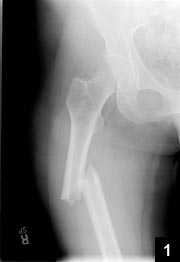 Dang, what was this 60-something year old lady(1) doing that resulted in her femur breaking like a branch across a gardener's knee? The unsettling answer? Nothing. She just felt a "giving away" sensation in her leg and then she gave way and went to ground. Of note, however, she had been taking medications for 17 years to prevent osteoporosis: first Fosamax and then Boniva.
Our bones are in a state of constant turnover. Breakdown of bone matrix by cells called osteoclasts is balanced by a corresponding build-up of bone mass undertaken by osteoblasts--a process that continually replaces old bone with new. In adults, bone formed equals bone broken down as osteoblasts fill areas along the bone surface previously resorbed by osteoclasts. Such dynamic restructuring in response to the forces of gravity and activity is essential to bone strength. In addition, this active bone metabolism repairs micro-traumas caused by everyday wear and tear as well as macro-traumas such as fractures.
As we grow older, we tend to breakdown faster than we build-up (well duh!). Ongoing osteoclastic activity is no longer countered in kind by reciprocal action from aging osteoblasts especially in women who are estrogen-deficient, inactive, on steroids, or deficient in calcium and vitamin D. Now bone resorbed by osteoclasts exceeds bone built by osteoblasts resulting in bones that are not only thinner but also architecturally unsound. As a result, vulnerable areas such as the hip, the vertebrae, and the bones of the forearms lose strength and fracture easily.
One strategy developed to combat this scenario is a class of drugs called bisphosphonates (Fosamax, Actonel, Boniva, Reclast, and others) which inhibit normal bone-remodeling through inhibition of osteoclasts. Since bone resorption triggers bone formation, these drugs are better suited to slowing loss rather than gaining mass. While population studies show decreased risk of fractures in persons using bisphosphonates, disturbing patient histories, such as that from the unfortunate lady pictured above, suggest that extended use of Fosamax and friends may result in bone fragility through the accumulation of microdamage in bones weakened by a loss of the normal reparative functions.
Texas researchers had a look at bone chips from persons who had spontaneous--i.e. no antecedent trauma--fractures while on Fosamax(2) most of whom had delayed or absent healing at the site of the break. Scary stuff on microscopic exam--many of the patients showed "markedly suppressed bone formation" with little or no osteoblastic activity and diminished mineralized bone. Even those patients on concurrent estrogen therapy demonstrated decreased bone formation. While Fosamax was the first bisphosphonate 'out of the gate' and thus most likely to be associated with fractures related to long-term use, scientists believe that this brittle bone thing may well be found with ongoing use of the other agents in this class.
Well yikes, is it time to boycott Boniva? Act not on Actonel? Consider first, this meta-analysis of several bisphosphonate trials.(3) These scientists from four different countries supported by Merck (Fosamax) and Novartis (Aredia, Zolmeta) analyzed data from three large studies looking for risk of fractures of the femoral shaft (considered atypical when compared with the more common fractures of the femoral head) as they were associated with use of bisphosphonates. Most reassuringly, they found such drug-related breaks to be rare, occurring at a combined rate of 2.3 per 10,000 patient-years. In other words, of 1,000 women using a bisphosphonate for 10 years, 2.3 would have an unexpected fracture of their thigh bone. There was no elevated risk of this type of fracture between those on Actonel and those on placebo, and a relative risk of 1.5 for women on Zolmeta (an IV bisphosponate most often used in serious situations such as in women with metastatic cancer where the drug slows down the spread of the tumor through the bones).
In an editorial that accompanies this study(4), Dr. Elizabeth Shane of Columbia University emphasizes that such atypical fractures are extremely rare, and particularly unlikely in persons on bisphosphanates. In fact, she cites studies that show, on average, that these femoral shaft fractures are more commonly caused by osteoporosis than the medications that treat the condition, and high adherence to this drug regimen more often decreases the risk of this type of bone breakage. She concludes: "many more common and equally devastating hip fractures are prevented by bisphosphonates than are potentially caused by the drugs."
Several authors have suggested that women on bisphosphonates be given a drug holiday in order to allow for a time of normal bone remodeling. Bisphosphonates bind to bone and are slowly released by osteoclastic activity. Fosamax is present in the body long after its use is discontinued--one study found bone turnover suppressed for three years after five years of regular Fosamax use. There are no official guidelines to follow with respect to intermittent bisphosphonate use, but one year off does not seem to diminish the positive effects on fracture risk.
What should you do? Talk with your doctor about taking a drug holiday (no, not THAT kind of drug holiday) if you've been on bisphosphonates for more than five years.
_____
(1) X-ray and case history from:
Goddard MS, et al. Atraumatic Bilateral Femur Fracture in Long-Term Bisphosphonate Use. Orthopedics. 2009 Aug;32(8). pii: orthosupersite.com/view.asp?rID=41933. doi: 10.3928/01477447-20090624-27.
(2) Odvina, CV, et al. Severely suppressed bone turnover: a potential complication of alendronate therapy. J Clin Endocrinol Metab. 2005 Mar;90(3):1294-301. Epub 2004 Dec 14.
(3) Black, DM, et al. Bisphosphonates and Fractures of the Subtrochanteric or Diaphyseal Femur. Published Online March 24, 2010 (DOI: 10.1056/NEJMe1003064).
(4) Shane, E. Evolving Data about Subtrochanteric Fractures and Bisphosphonates. Published at www.nejm.org March 24, 2010 (10.1056/NEJMe1003064)
Friday, April 09, 2010
The changing face of primary care
My medical partner and I are facing big decisions about the future of our medical practice. I urge all of you--particularly our patients--to head over to Denver Doc Online and read about our dilemma and leave your thoughts behind.
Friday, March 19, 2010
Morton's Foot
Dr. Dudley Morton practiced in the 1930's, first describing a number of foot ailments including Morton's foot (aka Morton's toe), and Morton's neuroma. Morton's foot is a common but dysfunctional variant of foot structure occurring in more than 25% of the population. By the time one hits middle-age, however, the instability caused by this condition can lead to pain and an inability to walk pain-free into the golden years.
Check out the sketch below from The Trigger Point Therapy Workbook for a look at Morton's Foot which is also known as short first metatarsal syndrome. The metatarsals are the longish bones beneath each toe, and the first metatarsal meets up with the big toe at a most critical juncture known as the 1st MTP (metatarsal phalangeal) joint which should be one of the primary weight-bearing areas of your foot.
If you've been issued a stumpy first metatarsal (arrow B), your weight is transferred to the 2nd MTP joint (arrow A) beneath your 2nd toe (arrow C). As a result, your weight can wobble inward towards the arch or outwards towards the little toe which has been likened to 'walking on ice skates'. The 2nd toe may extend beyond the big toe in persons with this Morton's business; while some call this long 2nd toe a sign of nobility. In my experience, it's a sign that you may give up walking for exercise.
Then look out, it's like a veritable aging house of cards cascading down your midline. The arches fall, a bunion may pop out, the ankles hyperpronate (see below), your calf muscles start working overtime to hold up your body, your knees knock together in the midline causing arthritis and collapse of your lateral knee joint,

you start to hate walking, gain weight, and plummet into old age way before your time.
So if that info knocked your socks off, check yourself for Morton's foot thusly: By pulling your toes downwards, you'll be able to see the locations where the metatarsals end and Morton's mayhem begins.
Got Morton's? I do. Custom-made orthotics and Pilates have changed my life. If you've been short-changed on your first metatarsal and are starting to hobble with pain, a trip to the podiatrist is definitely worthwhile. For more information, check out Mortonsfoot.com.
Check out the sketch below from The Trigger Point Therapy Workbook for a look at Morton's Foot which is also known as short first metatarsal syndrome. The metatarsals are the longish bones beneath each toe, and the first metatarsal meets up with the big toe at a most critical juncture known as the 1st MTP (metatarsal phalangeal) joint which should be one of the primary weight-bearing areas of your foot.

If you've been issued a stumpy first metatarsal (arrow B), your weight is transferred to the 2nd MTP joint (arrow A) beneath your 2nd toe (arrow C). As a result, your weight can wobble inward towards the arch or outwards towards the little toe which has been likened to 'walking on ice skates'. The 2nd toe may extend beyond the big toe in persons with this Morton's business; while some call this long 2nd toe a sign of nobility. In my experience, it's a sign that you may give up walking for exercise.
Then look out, it's like a veritable aging house of cards cascading down your midline. The arches fall, a bunion may pop out, the ankles hyperpronate (see below), your calf muscles start working overtime to hold up your body,
 your knees knock together in the midline causing arthritis and collapse of your lateral knee joint,

you start to hate walking, gain weight, and plummet into old age way before your time.
So if that info knocked your socks off, check yourself for Morton's foot thusly:
 By pulling your toes downwards, you'll be able to see the locations where the metatarsals end and Morton's mayhem begins.
Got Morton's? I do. Custom-made orthotics and Pilates have changed my life. If you've been short-changed on your first metatarsal and are starting to hobble with pain, a trip to the podiatrist is definitely worthwhile. For more information, check out Mortonsfoot.com.
Tuesday, March 09, 2010
Milk thistle for liver protection
I had a patient in yesterday whose medical records show a long history of elevated liver function tests. These enzymes, namely aspartate aminotransferase (ALT) and alanine transaminase (AST), are part of routine blood test panels often ordered to screen for disease. Normally present in liver cells, elevated levels in the blood can indicate disruption of the cells by inflammation or disease. Even minor elevations are taken seriously if they persist over time as progressive destruction of the liver from hepatitis or other disease can occur without major changes in the transaminase values.
Further testing indicated she might be suffering from auto-immune liver disease wherein a misguided immune response against one's own tissue can cause damage to the organ. She wondered what she could do to promote liver health while pursuing a definitive diagnosis with a specialist. I recommended milk thistle only to read the following today on the Consumer Lab web-site.
Consumer Lab is an independent organization that tests nutritional supplements for quality, assuring that these products are pure, contain what they claim, and are free of contamination. The nominal yearly subscription fee is well worthwhile if you are a fan, as am I, of supplements. One of their recent reviews covered milk thistle.
Only one brand was found on testing to contain the amount of active ingredient indicated on the label. Furthermore, the evidence that milk thistle changed the course of chronic liver disease caused by hepatitis or alcohol was weak. The research suggesting that the herbal preparation protects against liver toxicity from acetaminaphen and anti-seizure meds was stronger. The active ingredient in milk thistle--silibinin--has been the subject of recent cancer research and seems to have some promise as a chemotherapeutic agent.
I don't feel quite so enthusiastic about my recommendation now. If you're considering milk thistle supplements, have a look at the ConsumerLab site to choose the best brand.
Tuesday, March 02, 2010
Rheumatoid arthritis, disability, and dismay
One of my favorite patients struggles mightily with the pain and disability of rheumatoid arthritis. Unfortunately, she got hooked on Oxycontin that she started taking for the pain of infected foot ulcers brought on by the immune-suppressive drugs she takes to control her disease.
Each time I see her, I'm dismayed with 1) how quickly life can unravel due to disease and disability, and 2) how difficult it is to be taken seriously when you take too many pain meds no matter how legitimate your need for same. I spent over an hour on the phone today with the patient and a pain specialist she consulted last month. The latter never even examined her when she came to his office seeking help with pain control and narcotics withdrawal. "I could have you committed," he told her, "for your illegal use of drugs. What on earth did he think he'd accomplish with nonsense like that except to drive her to tears (which he did).
So now she's fallen and sustained four compression fractures of vertebrae made thin from steroid use. The orthopedist she sees for degenerative disk disease never mentioned to her that her new, dreadful pain was due to fractures. I have no idea what my colleagues think they're doing here. But I do know if you're malnourished, angry, and you look older than you are due to the ravages of pain and illness, it's extraordinarily hard to be taken seriously.
Tuesday, November 17, 2009
Social genomics and loneliness
The term social genomics is a new one to me. The fact that social factors influence health is not.
I wrote some time ago about the effects of self-described loneliness/social isolation has on the health of older adults. UCLA researchers examined the white cells of persons who were highest of the "high-lonely" vs. those "low-lonely" (socially connected) subjects.(1) A total of 209 genes showed different levels of expression between the two groups. Over 4 years of study, the lonely crowd over-expressed genes that resulted in inflammation and under-expressed those involved in antibody production against bacteria and viruses.
These DNA effects of social isolation were very specific to three groups of genes. The first group of affected genes are involved in the early phase of the immune response wherein the body revs up inflammation as a first response to injury or infection. I have written numerous times about the blessing/curse of inflammation insofar as appropriate levels are essential to a successful recovery from infection but too much (think cytokine storm in influenza pneumonia) or wrong place at the wrong time (say in an arterial wall that has cholesterol build-up) can be counter-productive or downright destructive.
The other two groups of immune genes that respond to the lonely soul's transformed internal environment are those that stimulate the production of interferon (a molecule that amplifies immune response against viruses) by lymphocytes and those that stimulate production of antibodies by B lymphocytes. The activity of both these types of genes is diminished in people who are less connected to friends and family.
The psychological literature abounds with studies in which socialization is correlated with susceptibility to viral illness. In another one of those 'who the heck volunteers for these things' type of study, researchers at Carnegie Mellon University assessed 193 subjects for PES (positive emotional style) vs. NES (negative emotional style of course) and then sprayed rhinoviruses/ common cold or influenza viruses up their noses to see who got sick.(2) Those NES-positive individuals, described as anxious, hostile, and depressed were 3 times as likely to succumb to the influx of nasal virus compared to all the PES prone Pollyanna types who were happy, lively, and calm.
Per Steve Cole, co-author of the study on white cells and loneliness: Research in social genomics has now clearly established that our interpersonal world exerts biologically significant effects on the molecular composition of the human body.(3) What remains to be seen is how attitude adjustments of the cognitive or pharmocological variety can affect how our DNA gets activated.
_____
1) Cole SW, et al. Social Regulation of Gene Expression in Human Leukocytes. Genome Biol. 2007;8(9):R189.
2) Cohen S, et al.Positive emotional style predicts resistance to illness after experimental exposure to rhinovirus or influenza a virus.Psychosom. Med. 2006 Nov-Dec;68(6):809-15. Epub 2006 Nov 13.
3) Cole SW. Social Regulation of Human Gene Expression. Current Dir. In Psych. Sci. 2009 Vol 18 No 3.
Sunday, November 08, 2009
To Elaine Calzolari 12/30/50-11/8/09


Astolat. Public art by Elaine Calzolari
My friend and sister-in-law Elaine Calzolari died early this morning. A sculptor whose innovative work with stone revolutionized the field, her favorite work was Astolat, named after the legendary home of the fair maiden Elaine of Arthurian legend.
It is my privilege to have shared her life and death along with her daughter Miranda Paley. We should all be so blessed to exit earth with such a brave and loving soul as Miranda at our side. Elaine's favorite poem was "Witnessing" by Gary Miranda, the perfect tribute to this mother/daughter team. Godspeed Elaine!
Witnessing
Beneath the leaves of a plant, that's named for milk
that bleeds milk, we search for chrysalides,
things that I've never seen, but whose name I like.
And I think as I look of all the things
you've taught me to name--larkspur, loose-
strife, sea lavender, plants called hens
and chickens, butter and eggs, your eyes
bright with such knowledge and solid as nouns.
Just so, you tell me now of creatures
who choose the underbelly of these leaves to make
wombs of, studded with gold, from which emerge
Monarchs that range the length of the Atlantic
in hordes--one more fact I must have missed
by skipping the fourth grade. And when, today
we find no trace of anything resembling this
miracle you mention, and I'm about to say
you made it up, you bend down, break a pod,
and blow unlikely butterflies in the sky's face-
not black and orange like Monarchs, but cloud-
thought white, or like the way I mark my place
when I read your eyes, which witnessing claim:
This is the world. Try to learn its name.
Witnessing.
Wednesday, October 28, 2009
Vitamin D and blood vessel health
I'm sure you know by now that vitamin D is the new darling of the vitamin world. If you're not taking extra, where have you been? UK investigators(1) tested blood vessel health in type 2 diabetics by an indirect method called flow mediated vasodilation or FMV and added yet another reason to consider letting a little sunshine onto your pasty white skin. And if your skin is not white, all the more reason to make an extra effort to get extra D by sun or by supplement-- darker skin is known to be more resistant to the effects of UV radiation with respect to the production of viratmin D.
First a review of FMV. This rather simple test measures the ability of the brachial artery located in the elbow to dilate in response to increased flow. A pressure gauge measures the force of blood flowing through this upper extremity vessel. A blood pressure cuff is then placed on the subject's arm and pumped up high enough to stop blood flow to the arm below. When released, the surge of blood returning to the artery causes the vessel to expand, accommodating an increased flow to the (briefly) oxygen-starved tissues of the lower arm.
This dilation is the mark of a healthy vessel. People with diabetes and hypertension have blood vessels that don't respond normally when tested--and also, unfortunately, in real-life situations such as exercise. Researchers, therefore, use this test to evaluate certain interventions like medications, vitamins, or dietary strategies that tend to normalize the wacked-out FMVs of those with such chronic conditions.
So Dr. Sugden and his colleagues took a group of sun-starved, diabetic Scots in winter and gave them a single whopping dose of D--100,000 units--testing their FMVs before and 8 weeks after the bolus. All of these subjects had D levels <50 ng/ml prior to the trial, and the D supplement raised their levels on average by 15. Darned if that D didn't do the duty! FMV levels rose significantly at follow-up.
Have you D-cided to up your D yet?
_____
( 1)Sugden, JA et al. Vitamin D improves endothelial function in patients with Type 2 diabetes mellitus and low vitamin D levels. Diabet Med. 2008 Mar;25(3):320-5. Epub 2008 Feb 13.
Tuesday, October 27, 2009
Small thigh circumference and cardiac risk
Here's a new take on body build and health! We are all familiar with the apple/pear thing in that those who carry their weight around the waist in an apple-ish silhouette are at greater risk of heart disease than those whose excess pounds hang on their hips. These Danish researchers took the measurements one level lower(1); here's what they found:
Professor Berit Heitmann and company from Copenhagen's Research Unit for Dietary Studies took tape measure to thigh on over 2800 legs still attached to as many Danes, then followed the group for 12+ years checking out incidence of heart disease and death. Pipe cleaner thighs that fell short of 60 cm. (23.6 in.) in circumference were an independent risk marker for both unfortunate endpoints.
So what's the problem with skinny thighs? Two of our biggest muscles are contained therein, namely the quadriceps and the hamstrings. A loss of muscle mass could be a marker for inactivity or chronic disease such as COPD that prevents exercise. In fact, a Canadian study found that loss of mid-thigh muscle mass as measured by CT scanning was a better predictor of mortality in chronic pulmonary patients than a low body mass (both indicative of the wasting associated with lung disease).(2) Less muscle mass is also known to predispose to insulin resistance and type 2 diabetes as demonstrated by the elevated fasting blood sugars and cases of diabetes that we unexpectedly see in scrawny old ladies.
So should we be measuring thighs along with waistlines, blood pressures, and pulse rates (and also asking about physical activity, sleep habits, diet histories and domestic violence in the leftover minutes of annual physicals)? Says Australian epidemiologist Dr. Ian Scott in an editorial accompanying the Danish study: "Will this association help clinicians predict risk in individual patients more accurately than they already do using readily accessible and validated risk calculators? The answer is — we do not know."
I, for one, shall pass for now.
_____
(1) Heitmann, BL et al. Thigh circumference and risk of heart disease and premature death: prospective cohort study. BMJ. 2009 Sep 3;339:b3292. doi: 10.1136/bmj.b3292.
(2) Marquis, K et al. Midthigh muscle cross-sectional area is a better predictor of mortality than body mass index in patients with chronic obstructive pulmonary disease. Am J Respir Crit Care Med. 2002 Sep 15;166(6):809-13.
Thursday, October 15, 2009
Idiopathic erythema
My friends used to worry that my father, a psychiatrist, was secretly diagnosing their psychopathology when they'd stop by the house. On average, one word--adolescence--was all that was needed to label our deviance from normal behavior during those formative years.
Sometimes, I like to play 'guess the diagnosis' when I'm out and about in public. During PTA meetings at my daughter's high school, I'd sit and wonder why another parent's face was so red (the meeting content, as you may guess, was simply riveting!). I never did figure it out, nor do I have the slightest idea what happened to the man in the years since last we met. I was disturbed, however, to come across an item in a medical journal that suggested that his diagnosis may not have been benign.
Idiopathic erythema is a fancy way of saying the skin is red and we don't know why. One of my fellow residents during training had allergic dermatitis (eczema) as a cause of his not-so-idiopathic erythema. Those patients who are red for unknown reasons tend to be male (73%) and older (average age 69 years in one study).
Out of 218 Singaporeans studied by dermatologists there, 18% were ultimately found to have cancer. Dr. Steven Thng and his colleagues concluded, "We recommend close follow-up with reevaluation for malignancy even if the intitial investigation had been negative."
I hope this fellow is doing well, ruddy but cancer-free. But I now have something new to think about when a patient complains "Boy is my face red!"
Friday, October 02, 2009
Vitamin D, influenza, and old ladies

Many epidemiologists now believe that flu is seasonal because vitamin D levels fluctuate seasonally. Vitamin D is a potent immune modulator; individuals tend to have higher levels during summer months with higher exposure to UV radiation and, therefore, are less likely to contract the flu while sun-kissed.
Researchers followed the seasonal health adventures of 208 post-menopausal women over three years as correlated with their monitored intake of D.(1) The results, shown in the bar graph above, were as follows:
- Those ladies in the placebo group (lightest bars) got cold and flu symptoms all year long, but especially in the winter.
- The test subjects (intermediate shaded bars) who received 800 units/day of supplemental D were as likely to get sick in the summer as winter, but were far less likely to take to their beds than their D-ficient colleagues.
- In the final year of the study, the test subjects were plied with 2000 units of D each day. Only one lady (as represented by the itty-bitty dark bar in summer) got sick while D-eeply dosed with the vitamin.
_____
1)Aloia JF, Li-Ng M: Epidemic influenza and vitamin D. Epidemiol Infect 2007; 135: 1095–1096.
Saturday, September 26, 2009
Big-time kyphosis

When some of my older female patients lie back on the exam table, their heads drop backward, necks extended, due to a forward curve in their thoracic spine between the shoulder blades. This hunchback thing is an exaggeration of the kyphosis or the gentle curve normally present in this area. It can result from weakness of the upper back muscles aggravated by poor posture but it becomes particularly prominent in women suffering from osteoporosis.
The lady in the above x-ray* has a helluva kyphosis based on osteoporosis. Her T score which compares her bone density to the ideally mineralized skeleton is -4.2 (normal range is greater than -1). This means that she has lost 42% of her bone mineral density and is severely osteoporotic. As a result, her normally block-shaped vertebral bones have collapsed anteriorly and become wedge-shaped due to compression fractures. She has lost height; her head and upper body have permanently sunk forward as her spine curled.
She no longer has room for her abdominal organs which have pooched out as her ribs sank into her pelvic bones (yes, that's bowel gas just below her chin--she is permanently gazing at her navel!). Worse yet, her thorax is severely shrunken, and her lungs can no longer fully inflate. She presented to the ER in respiratory failure as she could no longer exchange high CO2 exhaled air for high O2 inhaled air. She died during this hospital admission.
You do NOT want this collapsing spinal column thing. Lie on the floor--does your head flop backwards due to the forward curve of your upper spine? Are you uncomfortable without a pillow when lying flat on your back? Get your bone density checked. Find a physical trainer to nag you about your posture and work on your upper back strength. Take extra D and calcium!
_____
*Blechacz, B. Images in Clinical Medicine. NEJM 6/12/08.
Tuesday, September 22, 2009
The Teeming Team from Palliative Care
My friend was making some tough decisions. She was in the hospital for shortness of breath, and a lot of fluid had been drained from the area around her lungs earlier that afternoon. These effusions from her metastatic cancer would soon return; the question under consideration was what to do next.
Yet another knock on the hospital door heralded yet another helper with an agenda. No, not one helper, but rather a bevy of young, white-coated women bustled in.
"Hi," chirped one, "I'm Ms. Whatever from the Palliative Care Team. Your doctor asked us to come visit with you."
Oh heavens. This well-meaning crowd was about as welcome as a flock of Grim Reapers. Right time, right place, but WAY too many of them in the room, all eyes trained sympathetically on my friend lying in bed. The one next to me with Something, MD embroidered on her lapel (didn't have my reading glasses on) leaned forward, hands on knees in the sort of poise you'd use to peer down at a small child, and outlined the services the team could offer.
After a brief and strained conversation, E. sent them packing. Great idea, nice people, but they should crowd into a conference room and review their M.O.
Saturday, September 19, 2009
Prostate Cancer Risk Screening
"Should I get a PSA test?" My patient was giving me a run for his money during his annual exam last week. We'd already discussed the pros and cons of undertaking treatment for blood pressure, and he'd asked for the evidence why one medication was preferable to another. He wanted to know if the data I presented was from studies sponsored by dirty drug company money. Finally, he threw out this challenge to conventional wisdom on prostate cancer screening, and a very good question it was.
Men anticipate prostate cancer screening with all the dread that women bring to Pap tests. Screening is generally limited to men over the age of 50 (unless there is a history of early prostate cancer in a father or brother) and consists of an exam of that part of the prostate that can be reached by a probing finger plus a blood test for prostate specific antigen or PSA.
The problem is that the PSA, while being the only cancer marker test currently available for screening purposes, is not specific. In other words, most men with an elevated PSA do not have cancer. The digital exam is even less specific as many aging men have enlarged prostates without harboring cancer. Other screening deficiencies in our current approach of one blood test and one finger exploration include:
Dr. Klein suggests one approach to screening that uses seven variables to predict a man's risk of currently having prostate cancer. This test can be found at PCPT risk calculator.
_____
1. Klein, EA. What's new in prostate cancer screening and prevention? Cleveland Clinic Journal of Medicine. Vol 76 August 2009 439-445.
Men anticipate prostate cancer screening with all the dread that women bring to Pap tests. Screening is generally limited to men over the age of 50 (unless there is a history of early prostate cancer in a father or brother) and consists of an exam of that part of the prostate that can be reached by a probing finger plus a blood test for prostate specific antigen or PSA.
The problem is that the PSA, while being the only cancer marker test currently available for screening purposes, is not specific. In other words, most men with an elevated PSA do not have cancer. The digital exam is even less specific as many aging men have enlarged prostates without harboring cancer. Other screening deficiencies in our current approach of one blood test and one finger exploration include:
- Most men with prostate cancer (85% in one study) detected by PSA screening could avoid therapy. Per another study, one would have to screen 1400 men and perform 50 prostatectomies to prevent one death from prostate cancer.
- There is no PSA level below which the risk of cancer is zero. The Prostate Cancer Prevention Trial (PCPT) found cancer in 6.6% of men with PSAs below .5 and 12.5% of those men had aggressive cancer.
- Other factors seem to affect PSA levels, e.g. obesity and statin use lower PSA.
Dr. Klein suggests one approach to screening that uses seven variables to predict a man's risk of currently having prostate cancer. This test can be found at PCPT risk calculator.
_____
1. Klein, EA. What's new in prostate cancer screening and prevention? Cleveland Clinic Journal of Medicine. Vol 76 August 2009 439-445.
Tuesday, September 15, 2009
Doc of Ages now on Twitter
I'm going to give this a try for all the little pearls I come across in medical magazines that can be delivered to you in 140 characters or less. No updates on where I am, what I ate for breakfast, or how much sleep I got, just the latest in medical knowledge from the cutting edge.
You can sign-up at twitter.com/docofages. All my blogs will continue to be published on a more or less regular basis.
You can sign-up at twitter.com/docofages. All my blogs will continue to be published on a more or less regular basis.
Saturday, September 05, 2009
Is Multitasking Bad for Your Brain?
This morning I was perusing an August issue of Science. My husband walked into the kitchen and switched the radio on to NPR's Car Guys, then began grousing about what idiots they were and what bad advice they gave. So there I am, reading, drinking coffee (I don't suppose that counts), listening to those Car Guys yuk it up, and degrousing the spouse (that's what you do when you acknowledge someone's rants with sympathetic murmurings of assent). Oddly enough, in one of those 'bloggable moments' that those of you who blog know so well, the magazine article I was reading was "Multitasking--Bad for the Brain?"(1).
A word or two first about multitasking--I don't know when the word was coined, but in this day and age of electronic devices, the skill ranks right up there with missing sleep to multitask as one of the characteristics of New Age success. The ability to text, talk on the phone, work on the computer, and troubleshoot simultaneously is the mark of a modern manager (and that, Jean C, is why we pay you the big bucks!). More than once I've cited 'inability to multitask' as one of the job requirements that a patient applying for disability can no longer perform.
I personally go into what I call overwhelm mode if called on to multitask too long. Bi-tasking I can do, fielding an urgent message say in the middle of an exam, or mixing pancake batter while talking on the phone. Well actually, the latter has proven problematic in the past. But layering calls from the ER, prescriptions, annual exams, work-ins, and a kid crisis in a single afternoon puts me over the top with agitation.
So here's what Stanford scientists found when they compared 19 heavy habitual media multitaskers with 22 persons who generally limit their electronic input. The subjects were tested for their ability to filter out irrelevant environmental information as well as "irrelevant representations in memory." In addition, all the volunteers were also tested for the ease with which they switched tasks. Those heavy duty multitaskers (IM'ing, skyping, texting, gum-chewing fools no doubt) were more distractible and less able to switch tasks midstreams than their colleagues who characteristically uni- or bi-tasked.
The obvious question that arises from this study: Do multitaskers scramble their brains in the multitasking or are they just a flighty, distractible bunch from the get-go who are attracted by nature to a 3-ring cognitive circus?
My reaction to my a.m. over-stimulus? I excused myself ASAP to go blog, taking my IPhone along so I could respond to a text that just came through from Jean C.
_____
(1) Ophir, E, et al. "Cognitive Control in Media Multitaskers." Proc Natl Acad Sci USA. 2009 Aug 24.
Tuesday, September 01, 2009
Verbal fluency exercises

Verbal fluency or the ability to find the right word at the right time in a timely fashion is one of those front brain skills that lags with age. Add dwindling hormone levels, social isolation, and/or a history of even a mild concussion, and you may end up as fumble-mouthed as an evening news anchor.
We know that reading, working crossword puzzles, and interacting with friends are all ways to support brain function and verbal fluency. To heck with all that, how 'bout still another way to waste time on the Internet? Try lumosity.com, a web-site full of games that do both--bolster your brain and while away time you don't have. In particular, have a go at Word Bubbles which not only tests your verbal fluency but your typing and spelling skills as well.
And thanks, or no thanks, to my niece Miranda for the loss of many an hour!
Subscribe to:
Posts (Atom)


